The Strategist's Desk
The Key to the West: Grant’s Strategic Mastery at Vicksburg
Full Content FreeOctober 1, 2026
Share Email
Executive Summary
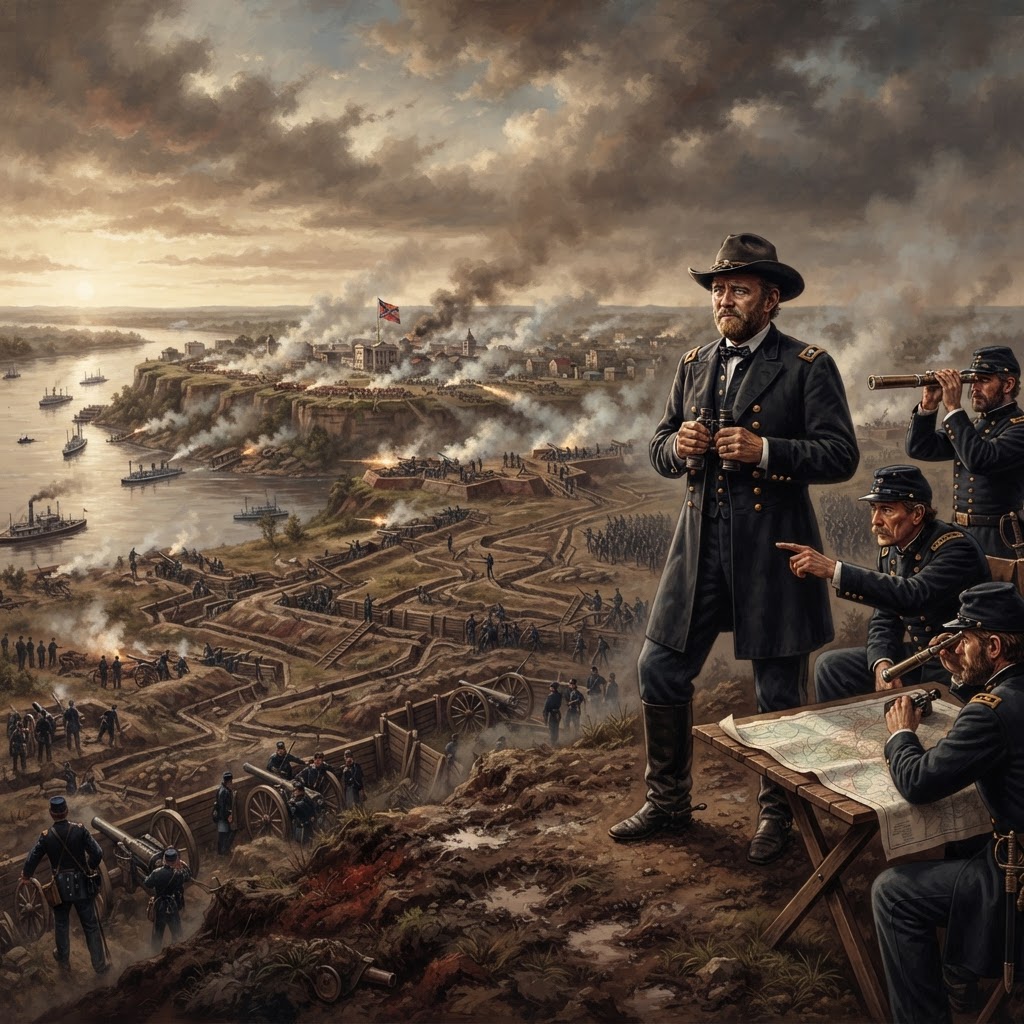
By 1863, the American Civil War had reached a stalemate in many theaters, but the Mississippi River remained the strategic juggernaut of the conflict. Major General Ulysses S. Grant understood that controlling the river was the 'key' to splitting the Confederacy. His Vicksburg Campaign was a masterclass in operational mobility and persistence. By isolating the fortress city and forcing a surrender on July 4, 1863, Grant effectively severed the Confederate states, demonstrating a modern understanding of total war and the importance of logistics and geography in strategic planning.
Key Points
- Strategic Geography: Grant identified Vicksburg as the essential 'key' to Union victory, recognizing that control of the Mississippi River would cripple Confederate supply lines.
- Operational Persistence: Despite early setbacks, Grant’s refusal to abandon the campaign showcased his tenacity and ability to adapt to difficult terrain and entrenched defenses.
- The Siege Mindset: The transition from maneuver to siege warfare highlighted Grant’s flexibility as a commander, ultimately leading to the surrender of 30,000 Confederate troops.
- Impact on Command: The success at Vicksburg solidified Grant’s reputation as the Union’s most capable strategist, eventually leading to his promotion to command all Union armies.
Sources
- The Key is Captured: Ulysses S. Grant and the Conquest of Vicksburg (https://www.thisiswhywestand.net/single-post/the-key-is-captured-ulysses-s-grant-and-the-conquest-of-vicksburg)
- The Vicksburg Campaign (https://www.essentialcivilwarcurriculum.com/the-vicksburg-campaign.html)
- Vicksburg campaign Wikipedia (https://en.wikipedia.org/wiki/Vicksburg_campaign)