The Strategist's Desk
Stormin’ Norman: The Strategic Architecture of Desert Storm
Full Content FreeOctober 1, 2026
Share Email
Executive Summary
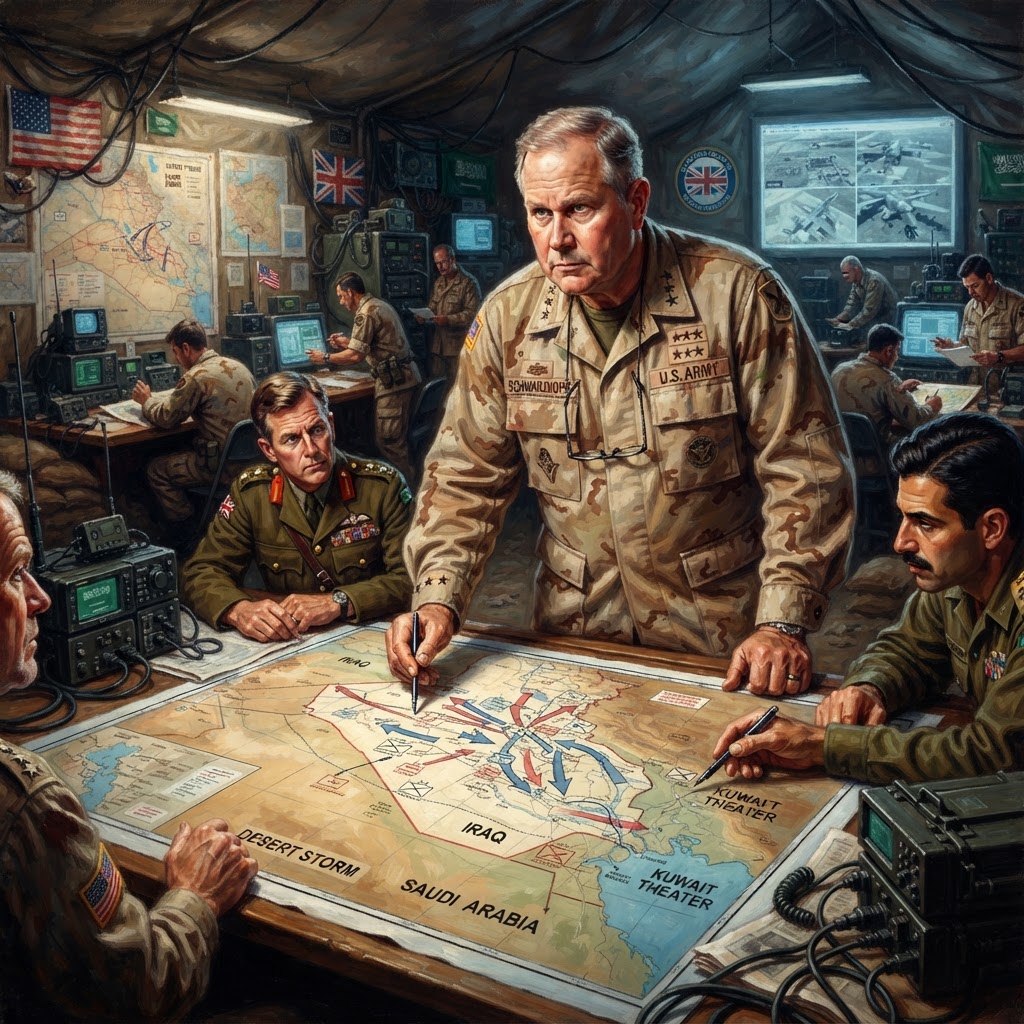
General H. Norman Schwarzkopf’s leadership during Operation Desert Storm in 1991 redefined modern warfare. Tasked with liberating Kuwait from Iraqi occupation, Schwarzkopf orchestrated a massive multinational coalition of 700,000 soldiers. His strategy relied on a sophisticated combination of air superiority, mass deception, and the integration of emerging technologies like GPS. By neutralizing the Iraqi military’s capacity to resist through a relentless air campaign before launching a decisive ground maneuver, Schwarzkopf demonstrated the effectiveness of overwhelming force and precise strategic planning in the post-Cold War era.
Key Points
- Coalition Management: Schwarzkopf successfully integrated forces from 35 different nations, a feat of diplomatic and military coordination that remains a benchmark for modern alliances.
- Air-Land Integration: The strategy prioritized the degradation of Iraqi forces via air power before committing ground troops, minimizing coalition casualties.
- Technological Advantage: The use of GPS and advanced intelligence allowed coalition forces to navigate the featureless desert, enabling the 'left hook' maneuver that outflanked the Iraqi army.
- Strategic Objectives: The campaign was defined by clear, limited objectives—liberating Kuwait and destroying WMD capabilities—which prevented mission creep and ensured a decisive outcome.
Sources
- Operation Desert Storm: The Gulf War ground campaign (https://www.iwm.org.uk/history/cold-war/gulf-war/operation-desert-storm-ground-campaign)
- H. Norman Schwarzkopf - Students | Britannica Kids (https://kids.britannica.com/students/article/H-Norman-Schwarzkopf/313441)
- #VeteranOfTheDay Army Veteran Norman Schwarzkopf (https://news.va.gov/108253/veteranoftheday-norman-schwarzkopf)