Battlefield Briefing
The Bloodiest Day: Tactical Failure and Strategic Shift at Antietam
Full Content FreeOctober 1, 2026
Share Email
Executive Summary
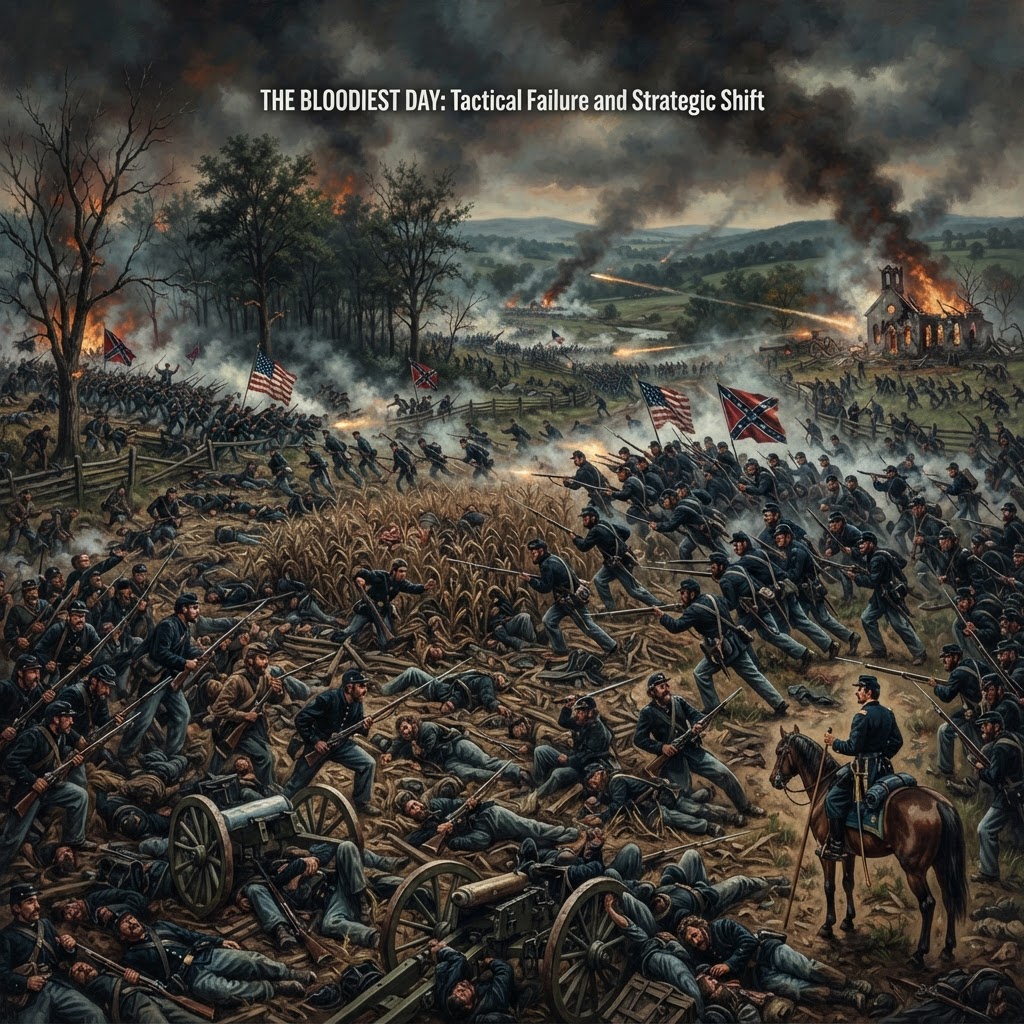
The Battle of Antietam, fought on September 17, 1862, near Sharpsburg, Maryland, remains the single bloodiest day in American military history. General Robert E. Lee’s first invasion of the North was met by Major General George B. McClellan’s Army of the Potomac. While the battle ended in a tactical stalemate, the sheer scale of the carnage and the subsequent Confederate retreat provided President Abraham Lincoln with the political capital necessary to issue the Preliminary Emancipation Proclamation, fundamentally shifting the purpose of the Civil War.
Key Points
- The battle consisted of three distinct, uncoordinated phases of attack across the northern, central, and southern sectors of the field.
- Despite having superior numbers, McClellan’s cautious leadership and failure to commit his reserves prevented a decisive destruction of Lee’s army.
- The engagement served as a strategic turning point, halting the Confederate momentum and preventing foreign intervention on behalf of the South.
- The high casualty rate highlighted the lethal evolution of weaponry in the mid-19th century, which had outpaced contemporary tactical doctrine.
Sources
[1] Battle of Antietam | Encyclopedia.com. [8] Battle of Antietam Wikipedia.