Battlefield Briefing
Operation Chromite: The Strategic Gamble at Inchon
Full Content FreeOctober 1, 2026
Share Email
Executive Summary
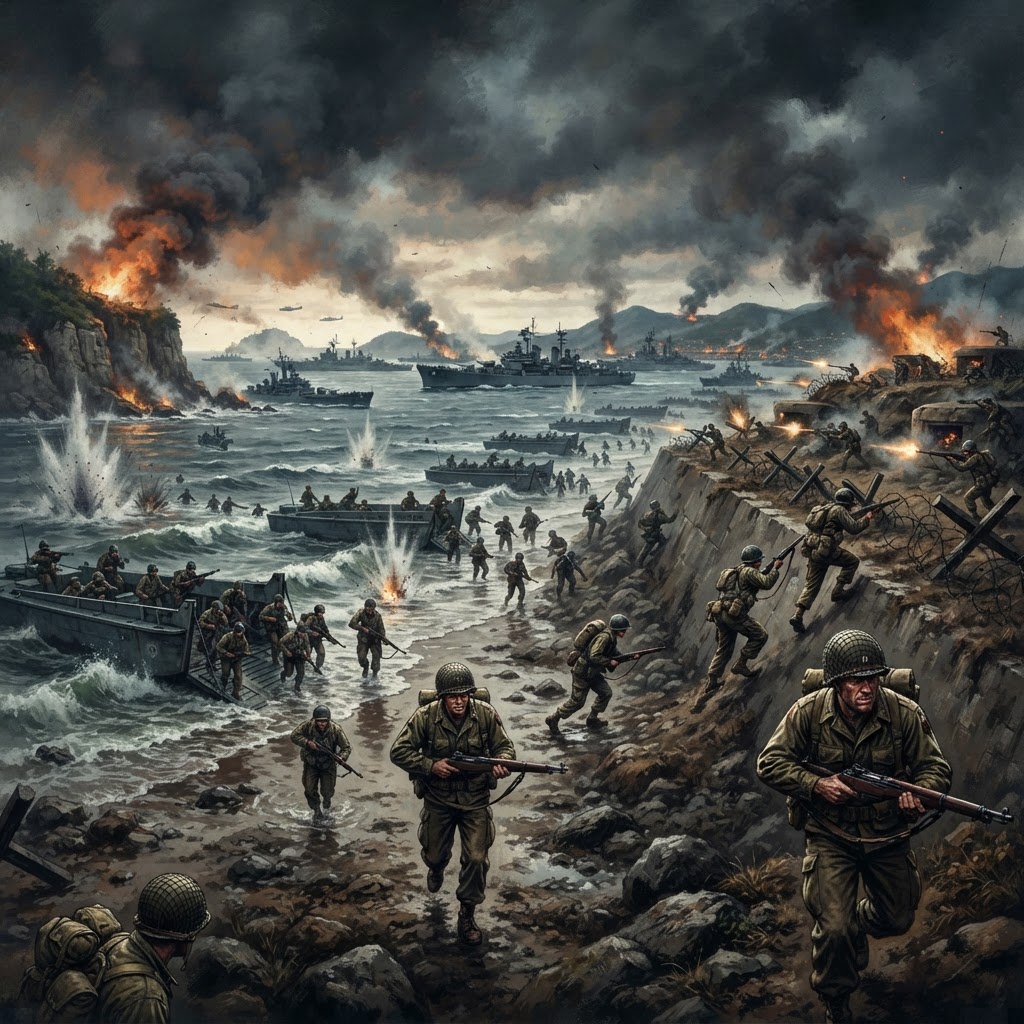
In September 1950, the United Nations Command, led by General Douglas MacArthur, executed one of the most daring amphibious operations in military history: the landing at Inchon. Facing extreme tidal conditions and a heavily fortified port, the operation aimed to cut North Korean supply lines and reverse the momentum of the Korean War. The success of the landing led to the rapid recapture of Seoul and the collapse of the North Korean offensive, demonstrating the enduring importance of amphibious power projection.
Key Points
- The operation involved a massive coordination of 75,000 troops and 261 naval vessels, showcasing the complexity of modern amphibious warfare.
- MacArthur’s decision to land at Inchon was highly controversial due to the port's treacherous mudflats and high tidal range, which limited landing windows to only a few hours.
- The success of the operation forced a total retreat of the North Korean People's Army, shifting the strategic initiative back to the UN forces.
- The landing remains a foundational case study for modern Marine Corps doctrine regarding power projection from the sea.
Sources
[2] This is how the US Marine Corps storms a beach. [4] Battle of Inchon - Wikipedia.