Leadership Center
The Crucible of the Central Highlands: Leadership at Ia Drang
Full Content FreeOctober 1, 2026
Share Email
Executive Summary
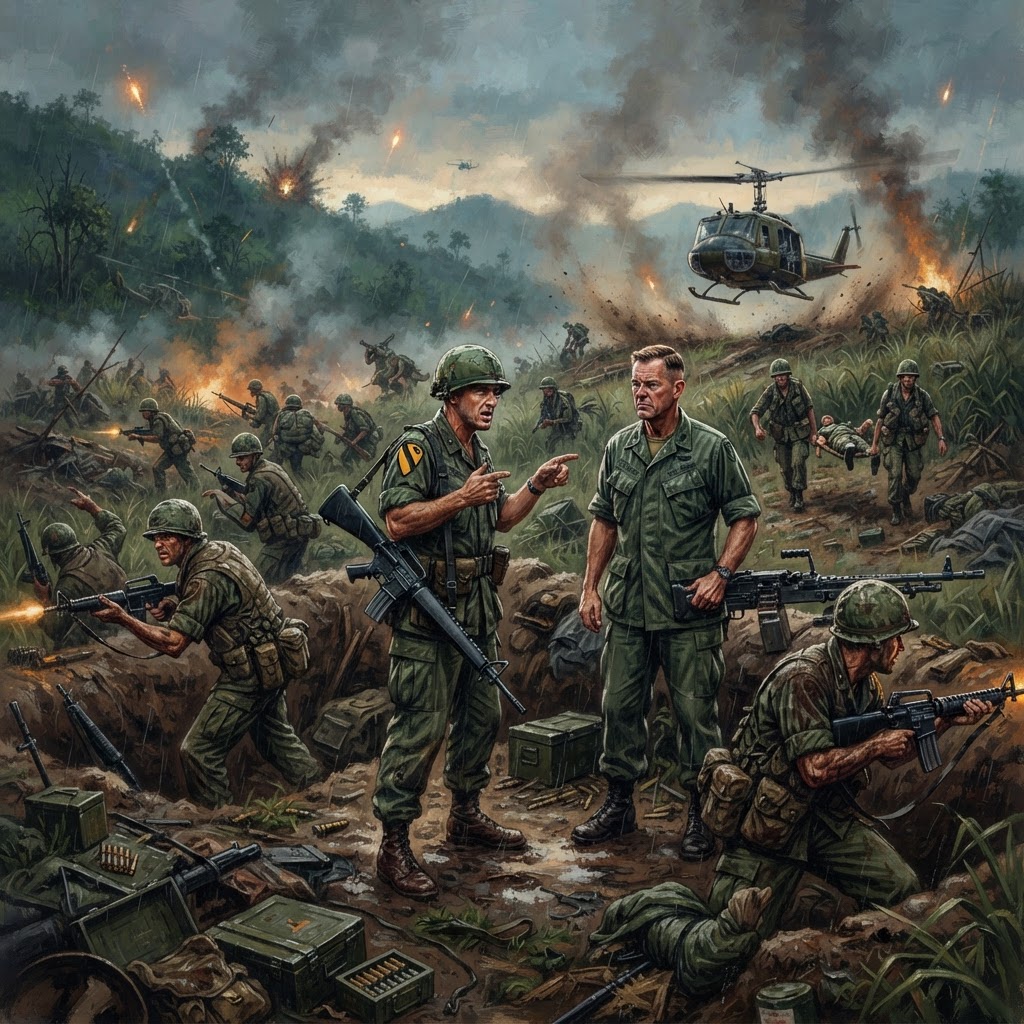
In November 1965, the Battle of Ia Drang marked the first major engagement between the U.S. Army and the People's Army of Vietnam (PAVN). For the 1st Battalion, 7th Cavalry, led by Lieutenant Colonel Harold G. Moore, the battle was a baptism by fire in airmobile warfare. This article explores the command decisions made at Landing Zone X-Ray, where leadership was tested against overwhelming odds and the fog of war in the dense jungles of the Central Highlands.
Key Points
- Airmobile Innovation: Ia Drang served as the proving ground for the 1st Cavalry Division’s helicopter-borne tactics, changing the speed and reach of infantry operations.
- Command Presence: LTC Moore’s decision to remain on the ground with his men, rather than directing from a command helicopter, was pivotal in maintaining unit cohesion during the intense NVA assaults.
- Tactical Support: The battle saw the first tactical use of B-52 Stratofortress bombers, demonstrating the shift toward massive, integrated firepower in modern counter-insurgency.
- The Human Cost: The engagement highlighted the harrowing reality of close-quarters combat, where platoon leaders like Rick Rescorla played critical roles in holding the line against repeated human-wave attacks.
Sources
- Military Intelligence Library: Battle of Ia Drang (https://intellibrary.libguides.com/Battle_Knowledge_Centers_INDOPACOM/Vietnam_War_Ia_Drang)
- Warfare History Network: Bloody Clash at the Battle of Ia Drang (https://warfarehistorynetwork.com/article/battle-of-ia-drang-bloody-clash)
- HistoryNet: A New Look at Ia Drang (https://historynet.com/new-look-ia-drang)