Weapons & War Machines
The Telegraph and the Railroad: Civil War Logistics and Command
Full Content FreeOctober 1, 2026
Share Email
Executive Summary
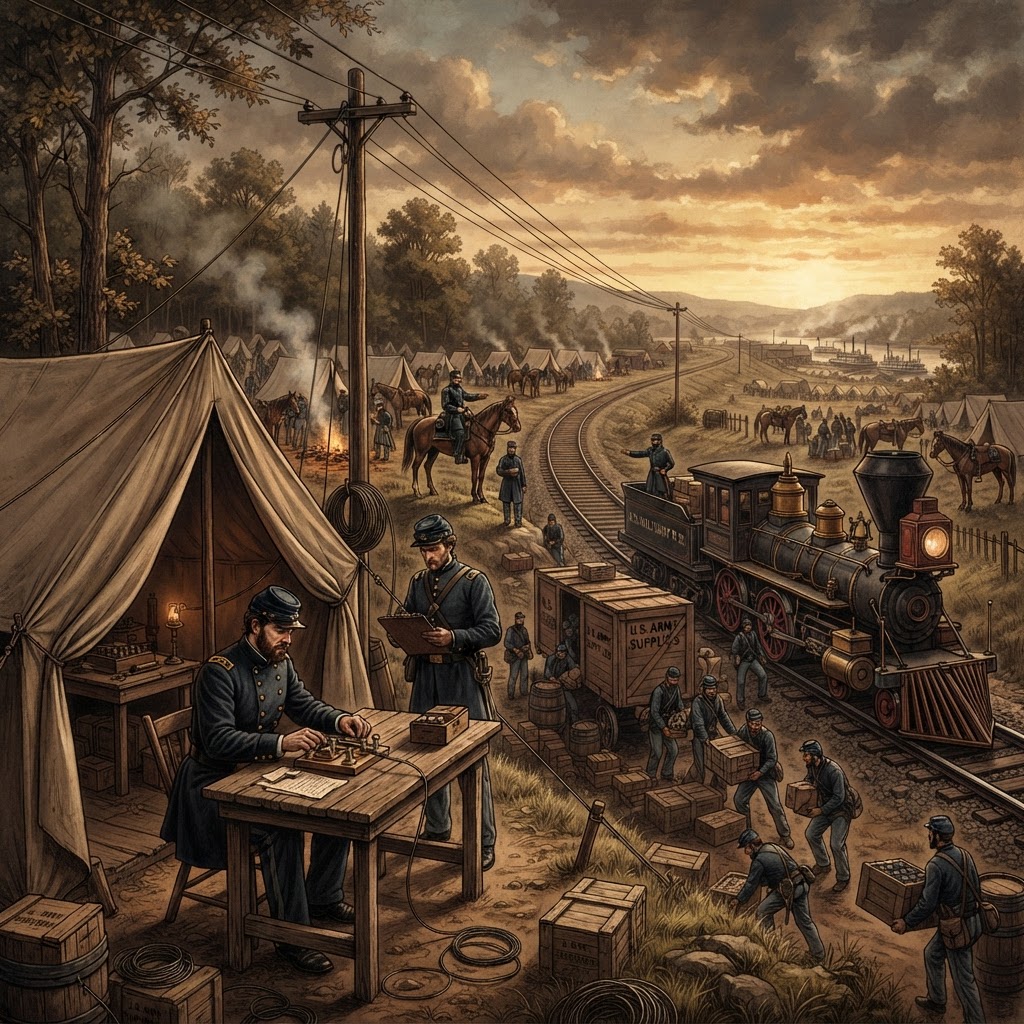
While ironclads captured the public imagination, the true 'machines' that won the American Civil War were the telegraph and the railroad. These technologies fundamentally altered the scale of warfare, allowing for the rapid movement of massive armies and the near-instantaneous coordination of military strategy across vast distances. This article explores how these industrial-age tools transformed the battlefield from a localized engagement into a continental struggle.
Key Points
- The telegraph allowed commanders to communicate with distant fronts in real-time, a capability that was previously impossible and essential for managing large-scale campaigns.
- Railroads became the primary arteries of the war, enabling the rapid deployment of troops and the sustained supply of munitions and food to the front lines.
- The strategic control of rail hubs often dictated the movement of armies, turning railway junctions into critical military objectives.
- The integration of these technologies marked the transition from Napoleonic-style warfare to the industrial-scale conflict that would characterize the 20th century.
- These innovations were not merely auxiliary; they were central to the logistical superiority that eventually favored the Union's industrial capacity.
Sources
- ThoughtCo, 'Innovations in Technology During the Civil War' (https://www.thoughtco.com/innovations-in-technology-during-the-civil-war-1773744)
- American Battlefield Trust, 'Civil War Overview' (https://www.battlefields.org/learn/articles/brief-overview-american-civil-war)