Weapons & War Machines
Ironclads at Hampton Roads: The Naval Revolution of 1862
Full Content FreeOctober 1, 2026
Share Email
Executive Summary
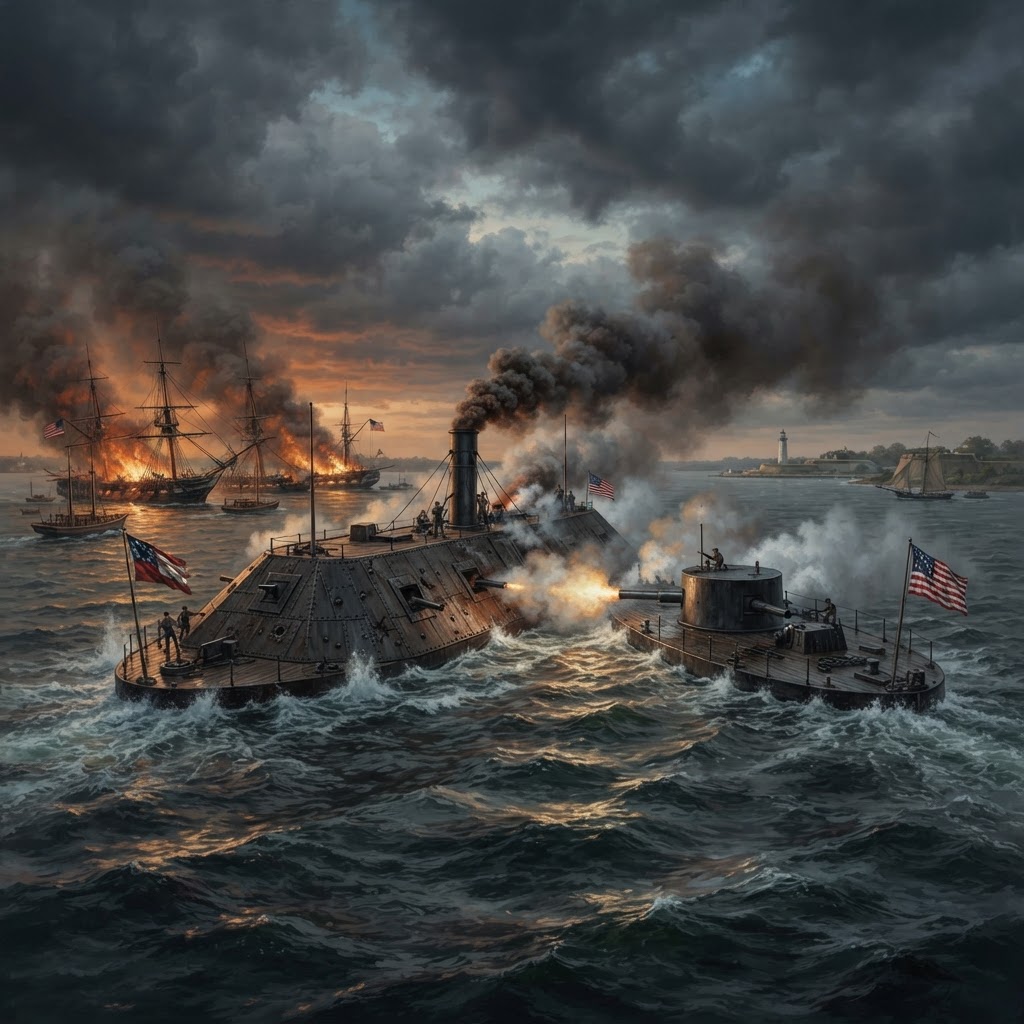
The American Civil War served as the crucible for modern naval warfare, most notably through the introduction of the ironclad warship. The clash between the USS Monitor and the CSS Virginia at the Battle of Hampton Roads in 1862 marked the end of the era of wooden naval dominance. By riveting iron plates to wooden hulls, engineers created vessels capable of withstanding traditional cannon fire, forcing a complete rethink of naval architecture and offensive weaponry.
Key Points
- The Battle of Hampton Roads was the first engagement between ironclad warships, proving that iron-plated vessels could render wooden fleets obsolete.
- The USS Monitor, constructed in Brooklyn, featured a revolutionary rotating turret, a design choice that would influence naval gunnery for the next century.
- The CSS Virginia, built from the salvaged hull of the USS Merrimack, utilized a casemate design that prioritized sloped armor to deflect incoming projectiles.
- Beyond the famous duel, the Union Navy expanded its ironclad fleet to include various designs, such as the CSS New Ironsides and the tower ironclad Keokuk, to maintain a blockade.
- These innovations were part of a broader technological surge during the Civil War, which also saw the integration of the telegraph and railroads into military strategy.
Sources
- ThoughtCo, 'Innovations in Technology During the Civil War' (https://www.thoughtco.com/innovations-in-technology-during-the-civil-war-1773744)
- The Mariners' Museum and Park, 'Civil War Ironclads: An Overview' (https://www.marinersmuseum.org/2025/12/civil-war-ironclads-an-overview)
- Wikipedia, 'Ironclad warship' (https://en.wikipedia.org/wiki/Ironclad_warship)
- Naval History and Heritage Command, 'USS Monitor' (https://www.history.navy.mil/content/history/museums/nmusn/explore/photography/ships-us/ships-usn-m/uss-monitor-ironclad.html)