War Media
The Living Room War: Media Influence in the Vietnam Era
Full Content FreeOctober 1, 2026
Share Email
Executive Summary
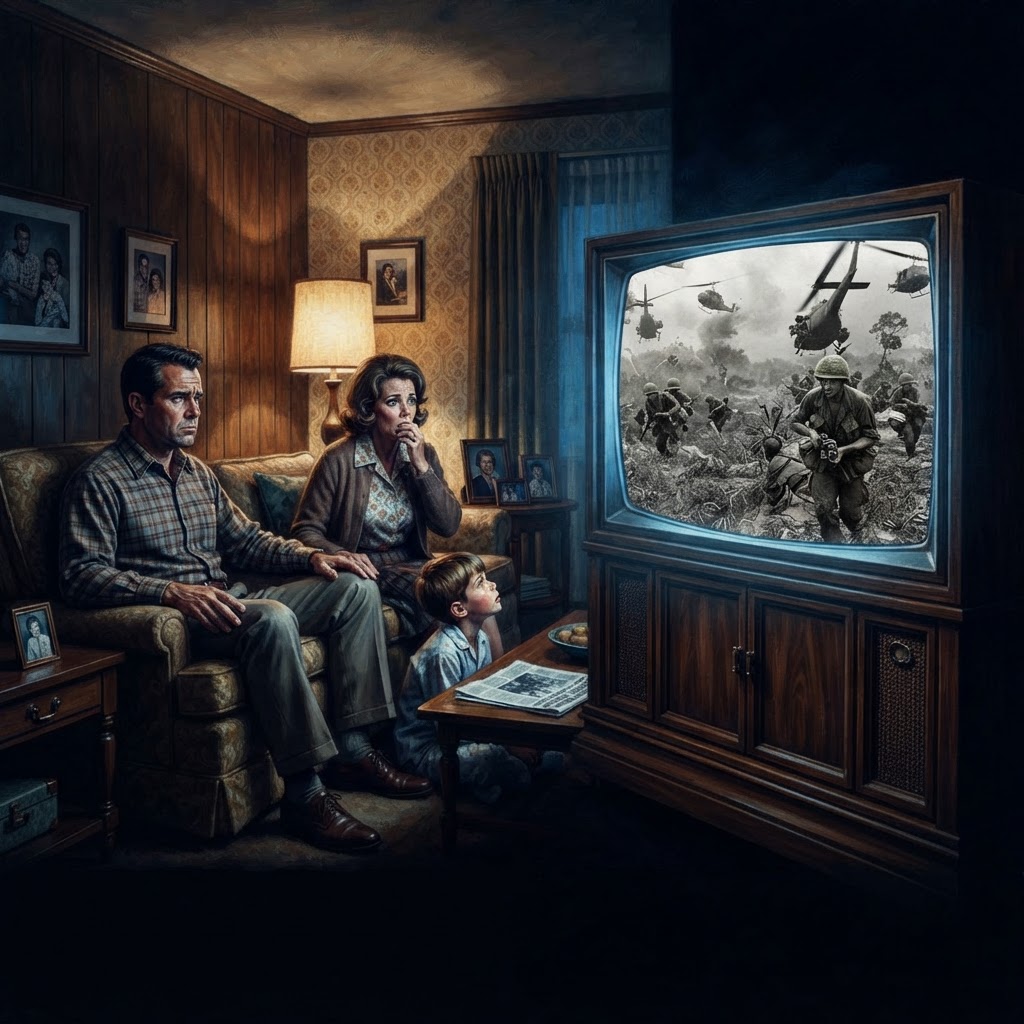
The Vietnam War is often cited as the first 'television war,' where the immediacy of combat footage fundamentally altered public perception of military operations. This analysis explores the relationship between the press, such as the reporting of Walter Cronkite, and the shifting political landscape of the 1960s and 70s. We examine how the media's role evolved from a supportive wartime apparatus to a critical observer, shaping the American public's understanding of the conflict.
Key Points
- The introduction of portable camera technology allowed for unprecedented access to the front lines, bringing the realities of jungle warfare into American homes.
- The 'credibility gap' emerged as a central theme in media coverage, as official government reports often conflicted with the visual evidence presented by journalists.
- Walter Cronkite’s 1968 editorial on the Vietnam War is analyzed as a turning point in public opinion, demonstrating the power of media figures to influence national policy.
- The legacy of Vietnam-era media continues to inform modern military-press relations, particularly regarding the ethics of embedded journalism.
Sources
[8] Britannica: Vietnam War and the media (https://www.britannica.com/event/The-Vietnam-War-and-the-media-2051426)