Colin Powell and the Chairmanship
October 3, 2026
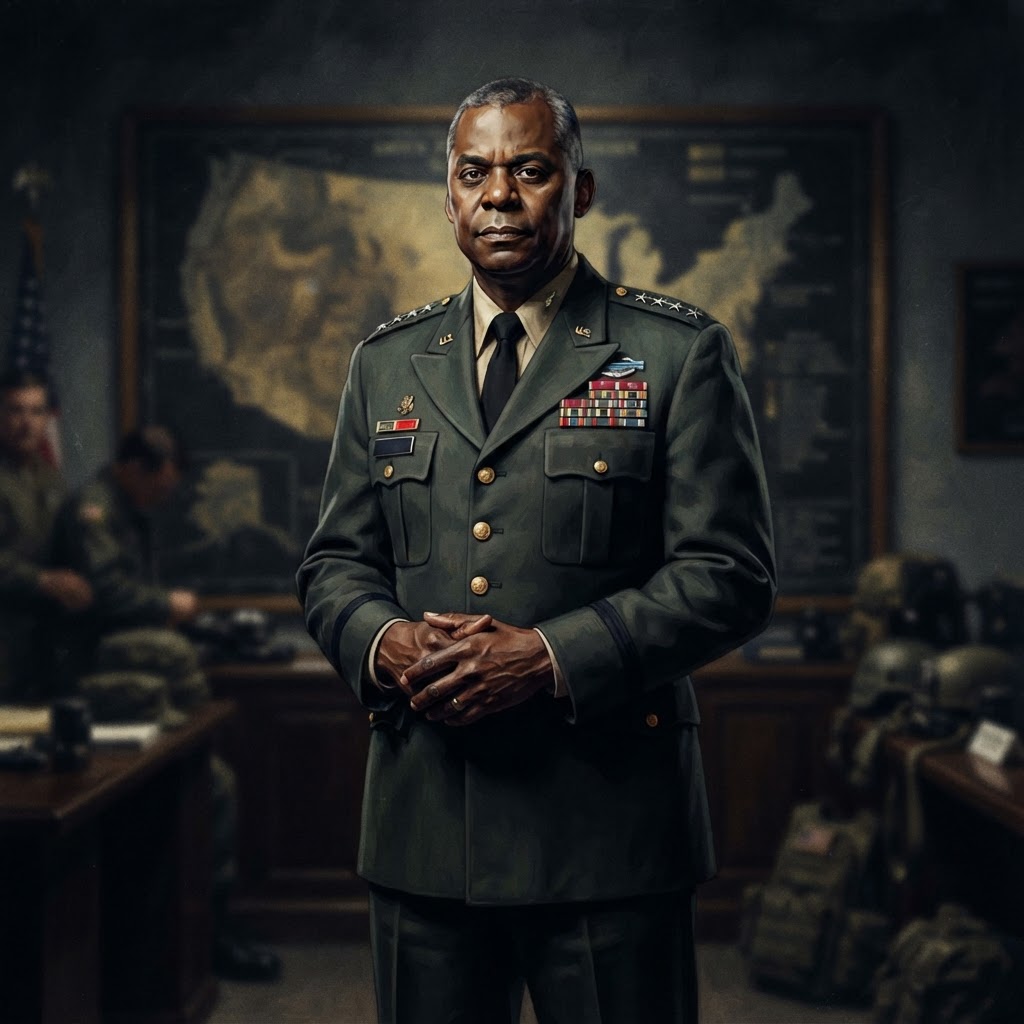
From the streets of the South Bronx to the highest echelons of American diplomacy, Colin Powell’s ascent remains a study in the intersection of institutional transformation and the weight of executive responsibility.
The Foundations of Discipline
Colin Luther Powell was born on April 5, 1937, in Harlem, New York, to Jamaican immigrant parents. Raised primarily in the South Bronx, he attended public schools before enrolling at the City College of New York (CCNY) in 1954. It was at CCNY that Powell discovered the structure that would define his professional life: the Reserve Officers’ Training Corps (ROTC).
He joined the Pershing Rifles, an elite drill organization that emphasized precision, camaraderie, and military bearing. For Powell, who later described himself as a "C-average student," the military environment provided a sense of belonging and a roadmap for advancement. Upon his graduation in 1958, he was commissioned as a second lieutenant in the United States Army.
Vietnam and the Crucible of Command
Powell’s formative combat experience occurred during the Vietnam War, where he served two tours. His first deployment in 1962 was as an advisor to a South Vietnamese infantry battalion. In 1963, while patrolling in the A Shau Valley, he stepped on a punji stake, a sharpened bamboo spike coated in toxins. The injury was severe, but he remained in the field.
During the same tour, he was involved in a helicopter crash while attempting to evacuate wounded soldiers. Despite his injuries, Powell remained at the site to organize the rescue of his fellow troops. For these actions, he was awarded the Soldier’s Medal for heroism not involving direct conflict with an enemy force. This period of service left him with a nuanced understanding of the limits of military power, an awareness that would inform his later strategic thinking.
Staff Mastery and Institutional Reform
Following Vietnam, Powell moved into the upper echelons of the defense establishment. He was selected as a White House Fellow in 1972, serving in the Office of Management and Budget. This posting proved pivotal, as it exposed him to the complexities of federal policy-making and budgetary constraints.
His trajectory accelerated through staff assignments at the Pentagon and the National Security Council (NSC). In 1987, President Ronald Reagan appointed him as the National Security Advisor. Two years later, in 1989, President George H.W. Bush selected him as the Chairman of the Joint Chiefs of Staff. Powell was the first Black officer, and the first ROTC graduate, to serve in the position. During his tenure, he played a central role in implementing the Goldwater-Nichols Department of Defense Reorganization Act of 1986, which sought to streamline the chain of command and improve inter-service cooperation.
Strategy and the Powell Doctrine
Under Powell’s leadership as Chairman, the U.S. military undertook two major operations: Operation Just Cause in Panama (1989) and Operation Desert Storm (1991). The latter, a massive international coalition effort to eject Iraqi forces from Kuwait, was characterized by its rapid execution and clear objectives.
These experiences solidified what became known as the "Powell Doctrine." The strategy argued that military force should only be used as a last resort, with clear political objectives, overwhelming force, and an exit strategy to avoid prolonged involvement. While effective in the context of conventional interstate warfare, the doctrine faced subsequent criticism during the early 2000s, with analysts arguing that its focus on overwhelming force was less applicable to the unconventional insurgencies and counter-terrorism operations that came to define the post-9/11 era.
The Diplomatic Stage and the UN Presentation
In 2001, Powell was confirmed unanimously by the Senate as the 65th Secretary of State. His tenure was marked by the diplomatic challenges following the September 11 attacks and the subsequent planning for the invasion of Iraq.
On February 5, 2003, Powell appeared before the United Nations Security Council to present intelligence regarding Iraq’s alleged weapons of mass destruction (WMD) programs. The presentation relied on classified evidence that later proved to be inaccurate. The absence of WMDs in Iraq following the invasion became a central issue of his career. In later years, Powell acknowledged that the presentation was a "blot" on his record, emphasizing the heavy price of staking personal credibility on intelligence that had not been subjected to rigorous verification. He resigned from his post in 2004.
Leadership and the Burden of Credibility
Colin Powell died on October 18, 2021, at the age of 84. His career serves as a complex case study for military and political leaders. His rise from an ROTC cadet to the highest levels of government demonstrates the importance of institutional preparation, institutional literacy, and the ability to articulate complex strategy in plain, accessible language.
Beyond his tactical and administrative successes, his life highlights the ethical risks inherent in executive decision-making. He championed the idea that leaders must possess the moral courage to question the foundations of their own decisions, especially when those decisions involve the use of lethal force. His eventual admission of error regarding the 2003 UN speech remains a cautionary lesson for those in power: intelligence is a tool, not a certainty, and a leader’s greatest asset—their credibility—is fragile.
For the modern strategist, the legacy of Colin Powell is not found in the glorification of conflict, but in the rigorous, often uncomfortable, process of weighing the costs of war against the reality of the evidence at hand. He blazed a path not merely as a pioneer of civil rights within the armed forces, but as an official who grappled with the profound consequences of his own strategic choices on the global stage.